
MFSA launches ScamAlert.mt as fraud evolves from email to romance scams
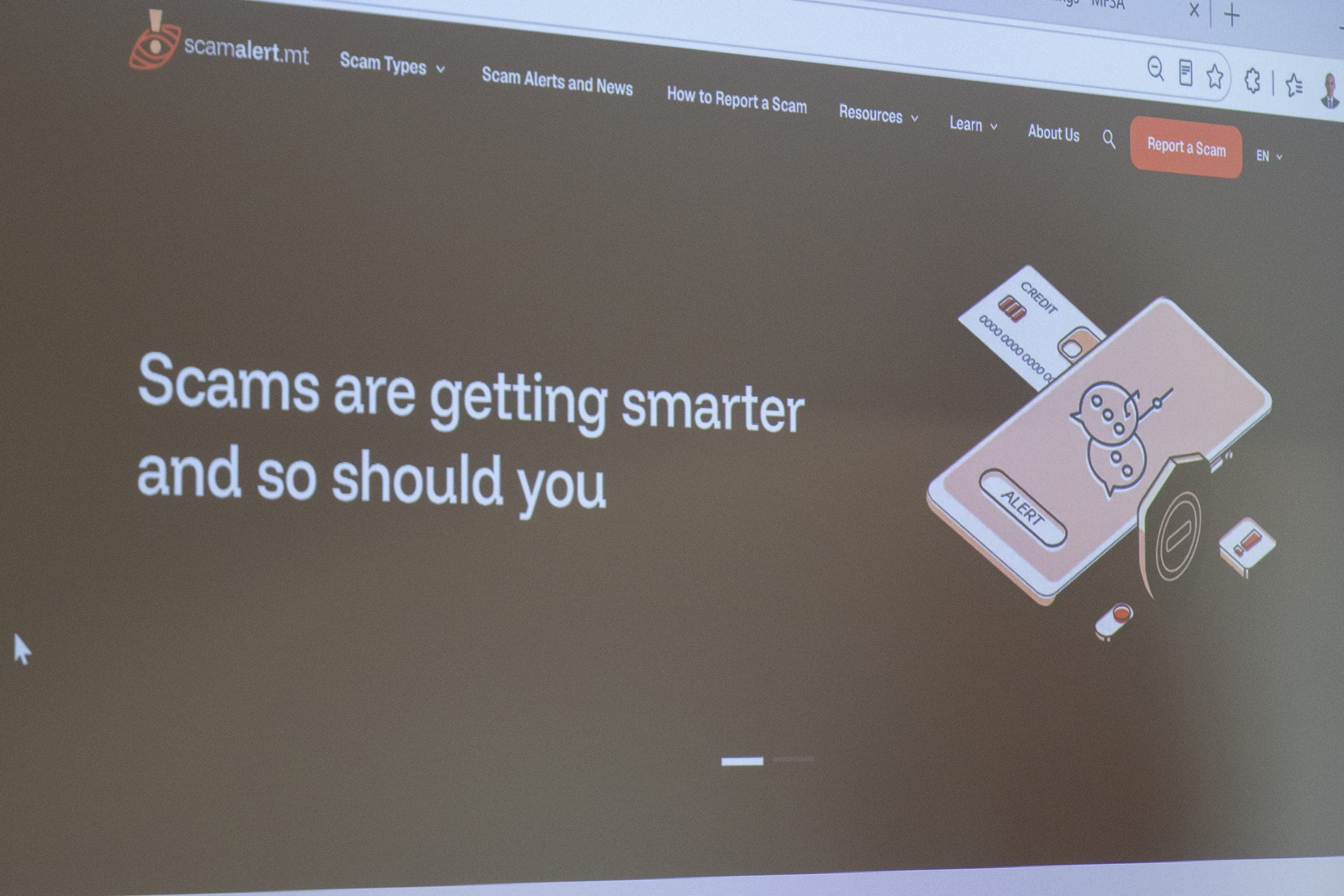
New website ScamAlert.mt aims to help the public spot, avoid and report scams, as authorities warn fraud is growing more sophisticated.
The Malta Financial Services Authority has launched ScamAlert.mt, a website designed to help the public spot, avoid and report scams. The platform is a collaboration with the police force and the Office of the Arbiter for Financial Services.
The site covers common scam types, from business email compromise to romance fraud, each with red flags and practical prevention steps. It also hosts real-life, anonymised case studies and links to MFSA warnings and IOSCO's international investor alert database, so users can check whether an entity is authorised or a website has been cloned.
Sarah Pulis, MFSA head of conduct supervision and the country's financial literacy ambassador, said simplicity, accessibility and practicality were the three principles behind the design. The site works equally well for a student or a pensioner, she said, and is available in both Maltese and English.
Scams are constantly evolving, with fraudsters growing more creative and innovative. She traced the shift from old email lottery scams to today's romance scams and impersonation of public authorities. The clearest red flag across all of them, she said, is urgency.
Permanent Secretary for Finance Paul Zahra said the theme of the initiative is awareness, not enforcement. ScamAlert.mt, he told guests, is what cross-government cooperation looks like once it leaves the page. For residents, he said, these are not separate issues but one problem, and the government's job is to simplify the system, not add to it.
Permanent Secretary for Home Affairs and Security Joyce Dimech described receiving a text message weeks earlier claiming to be from the tax authority and urging her to click a link. She paused instead. That pause, she said, is often the only thing standing between a person and a loss they cannot undo.
Deputy Police Commissioner Sandro Gatt said online scams no longer target specific groups, relying on the exploitation of trust and urgency rather than technology. He urged victims to report scams, as each prevented one spares them financial loss, emotional distress, and suffering.
Arbiter for Financial Services Geoffrey Bezzina recalled a moment as consumer complaints manager at the MFSA when a 70-year-old man walked in after sending 70,000 Maltese lira to fraudsters posing as a foreign lottery. "The recovery of those 70,000 Maltese lira was impossible," Bezzina said. The man had asked staff to keep the loss from his terminally ill wife, as the money was their life savings.
Bezzina said the arbiter's model, introduced in 2024 to split liability, has gained international interest. The office has eliminated its complaint fee, reduced case times, and received a record number of complaints this year, many of which are scam-related. He noted that Singapore and Australia already hold telecoms and social media firms, as well as banks, liable for scam losses. Malta will host the next global arbiter conference in early October.
MFSA CEO Kenneth Farrugia described one case in which funds moved from Malta to Estonia, then Thailand, then China within a single hour before being withdrawn as cash. He tied the platform to Malta's 2022 commitment to the Financial Action Task Force and argued that financial literacy has become a basic life skill, calling on the public to act as ambassadors for the site.